10 Inspirational Images Of B1 Driving License
How to Apply For a B1 Driving License In certain states, if it is a B1 visa or a B2 and are staying legally for more than 30 consecutive days, you might be eligible for a driver's license. But, it's crucial to know the procedure before applying. A driving license holds lots of information about the person who holds it, including vehicle categories and restrictions including emergency contact blood group and much more. Age requirements The age requirements for obtaining a B1 license vary from state to state. In the majority of states, you must be at least 17-years-old to be able to drive a car. If you qualify for Disability Living Allowance, you can apply for a provisional license when you are 15 years old. You must pass the theory test and practical test before you can get your driver's license in full. A B1 driver's license is a great way to get started on the road, especially in the case of young drivers. It will also allow you to get a job. This kind of license is perfect for those who want to establish their own business or contract with contractors. This can be very helpful for those who want to travel and work abroad. If you're under 19 and have completed a day of hands-on training under the supervision of a certified instructor, you can drive with a B1 license. In addition you must not have serious traffic violations in order to get a driving licence. The permit is valid for each year. In this time, you must attend an initial aid course and pass an eye test. Category AM – This covers mopeds, as well as vehicles that weigh less than 350 kg unladen (excluding the battery). This category does not apply to driving on public roads. Category B – This category covers four-wheel motor vehicles that aren't covered by categories AM or BE. It can carry a maximum of eight passengers in addition to the driver. Category C – This covers vehicles towing trailers, but the combined MAM cannot exceed 3500kg. If you're an immigrant non-immigrant (B-1, B-2 or F-1) visa, you can apply for a driving permit. You are able to legally drive in the US when you are on a nonimmigrant visa (B-1 B-2, B-1, or F-1). You must, however, provide your passport as the proof of visa when applying for an driver's license. Education requirements The B1 driving license is an official document which allows drivers to drive on the national road as well as in most foreign countries. It is the simplest to obtain and, in some countries, it is even free of cost. In order to qualify for this permit, you must meet some basic prerequisites, including obtaining an official driving license and passing the theory test. 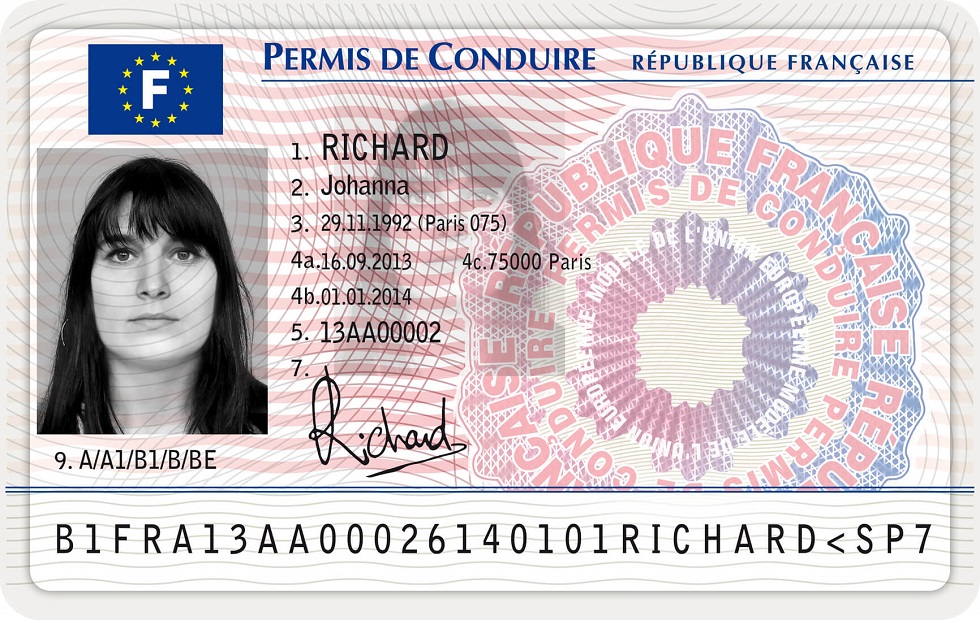 Drivers are required to take several lessons at a driving school before taking their test. These lessons are taught in the evening by instructors who are authorised. The lessons are divided into general lessons that all students have to be enrolled in and specialized classes that are specific to certain kinds of vehicles. Based on the type and size of the vehicle, a student may have to attend multiple lessons in order to pass the test. Once a person has passed the theory test, they be issued a provisional licence. This permits them to drive as long as they are accompanied by a driver who has a full driving licence. Generally, this is a parent or guardian but it could also be an individual who is a relative or friend of the driver. In most countries the driver is also required to take a medical test and be able to see clearly before they can obtain a full licence. The theory test is a multiple-choice test. The test covers questions about road signs, rules, and diagrams. The candidate must answer 25 questions in eight minutes. The questions are based off of the information in the driver's handbook that is handed out to all drivers during the test. The test is conducted in a local testing centre, and the questions are written in English. If you are planning to drive a van, it is important to understand how the weight limit works. A driver with the category B license is able to drive a vehicle that weighs as much as 400 kg when unladen or 550 kg when carrying goods. This weight is determined by the maximum permissible gross weight (GVW) which includes the weight of both the driver and the passengers. If you want to drive a heavier vehicle, you will need to pass another test. Practical test A b1 driving permit is a legal document that permits the driver to operate vehicles of light weight. The b1 driving license can be obtained by passing a theory test (written) and an examination in the practical area using a government-approved driving tester. The license is valid in the country, as well as many other countries. To be eligible for this license, the person applying must meet a number of requirements, including a certain age and fees. The test in the practical part requires the candidate drive a car and demonstrate their ability to safely and responsibly operate it on the road. The examiner will assess the candidate's performance by observing their driving skills and assessing whether they obey traffic rules and signals. licencefrancexpress will evaluate the candidate's knowledge of road rules and their perception of dangers. The examiner will also evaluate the candidate's ability to comprehend the impact of various weather conditions on driving conditions. It is recommended to prepare for the practical driving test as often as you can prior to taking it. This can help you improve your chances of success and avoid costly mistakes. In addition, it will save you time and money. You can try several mock tests to get a feel for the actual exam. The test will help you develop your driving skills and give you a sense of what you will be facing on test day. You must be at the testing centre within a few minutes of the time of your appointment. The test could be cancelled if you are late. You must bring your photocard licence and your certificate of passing the theory test. If you are required to do so you will also be required to provide an official health certificate. Category B1 is a driving licence for motor vehicles with four wheels. up to 400 kg without load or 550 kg if they are specifically designed to carry goods. This license can be used to drive motor tricycles or quadricycles, as long as the vehicles are not more than 550kg. If you plan to drive larger vehicles, look into obtaining an e-license instead. Theory test The theory test is a crucial element of the licensing process. It is the first step to obtaining a b1 driving license and must be completed before taking your practical test. It isn't easy to pass the test, but with lots of practice and mock tests, you will increase your odds. The test is an multiple-choice test with between 20 and 40 questions. The questions are of various difficulty and you'll be penalized if you answer a wrong question. The b1 test focuses on driving laws including hazard perception and traffic signs. You can prepare for the test by reading official books or by using online sources. You can prepare for the test by participating in training courses and programmes. Some of these courses are completely free and some may require an additional cost. You can learn with an instructor or a driving school. You will receive the certificate after having passed the theory test. This can be used to book your practical exam. This certificate can be used for ten years and it will be valid until you turn 75 (female) or 60 (male). You can take your theory test as many times as you need however, you have only two years from the time you pass the theory test to pass the practical test. The b1 license is a subcategory of category B. It permits the use of vehicles up to eight passengers or a trailer weighing up to 750kg. This is the best option for those who want to drive larger vehicles, but do not want to drive vans. The license is valid for five years, and it can be extended to 10 years if the driver has completed an exam to refresh. Drivers must also pass medical examination in order to obtain the licence. This must be done within six months of taking the test. The renewal of a driver's license also requires payment of a yearly fee.